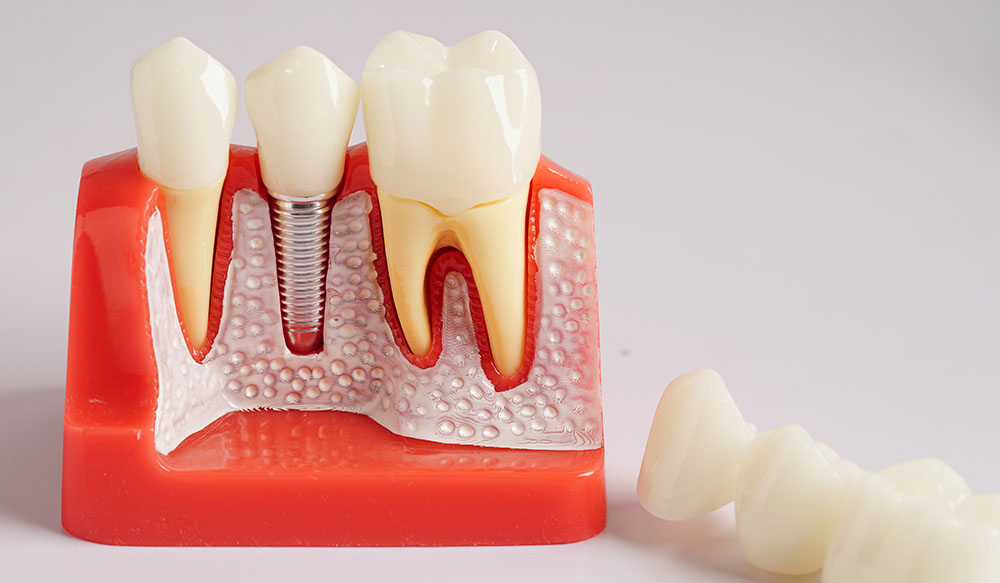
Dental implants are the go-to option for people who want a natural-looking replacement for a missing tooth. These incredible innovations can do much more than fill in the gap in your smile, though. They also enhance chewing function, protect your bite and jawbone, and even open more options for future restorations. Read on to learn more about these underrated uses for dental implants and why each outcome matters for your oral health.
1. They Provide Jawbone Stimulation
Jawbone stimulation is the number one reason our female dentists recommend choosing dental implants when you need to replace a tooth. Your jawbone needs consistent stimulation from chewing pressure to stay healthy and strong. If you have a missing tooth, the bone below the empty socket doesn’t get that stimulation. Over time, your body will slowly reabsorb the bone in that area, making future restorations more difficult and potentially weakening the bone around nearby teeth too.
Unlike dentures and bridges that sit on top of the gumline, implants are attached to a titanium screw that is surgically inserted into your jawbone. When you chew with one, the bite force of the chewing stimulates the bone around the screw the same way a natural tooth root would. Your jawbone stays healthy, the implant stays firmly in place, and you don’t have to worry about nearby teeth losing bone support over time.
2. They Make Chewing Much Easier
It’s hard to chew food thoroughly with a missing tooth, and replacement options like dentures and bridges only partially fix the problem. Dentures can slip around easily while eating, and bridges can sometimes crack or break under strong biting pressure.
Implants, on the other hand, function exactly like a natural tooth. With a strong artificial “root” to anchor them and a single durable crown attached to that root, chewing with one feels almost identical to chewing with natural teeth. The only difference is the lack of sensory feedback from the nerves in a real tooth – but since that also means you won’t have to worry about tooth sensitivity in the implant, it’s not a bad trade-off, is it?
3. They Keep Your Other Teeth Aligned
When you lose a tooth, you change the shape of the arch it used to be part of. The teeth on either side of the newly empty space now have half an arch’s worth of pressure pushing them into that space and nothing standing in their way. Over time, they may begin to drift into new positions, changing your bite and making you more vulnerable to problems like gum recession and teeth grinding.
4. They Provide Great Anchor Points for Future Restorations
Getting an implant is like future-proofing your mouth: as long as the bone around the screw stays healthy, you’ll always have a strong anchor point available for restorations. Most people who get implants choose to attach a single crown (man-made tooth) to the titanium screw in their jawbone, but that crown can easily be removed. The screw can then be reused as an anchor point for more complicated prosthetics like bridges and fixed dentures if you lose more teeth later on.
The Bottom Line? Dental Implants Are the Best
Dental implants have so many upsides that there’s no reason not to get them if you can afford them. They’re long-term investments in your oral health and quality of life, and they’re often more cost-effective in the long run too. Think you’d like to get one of your own? Contact our office today and book your consultation appointment to get started.